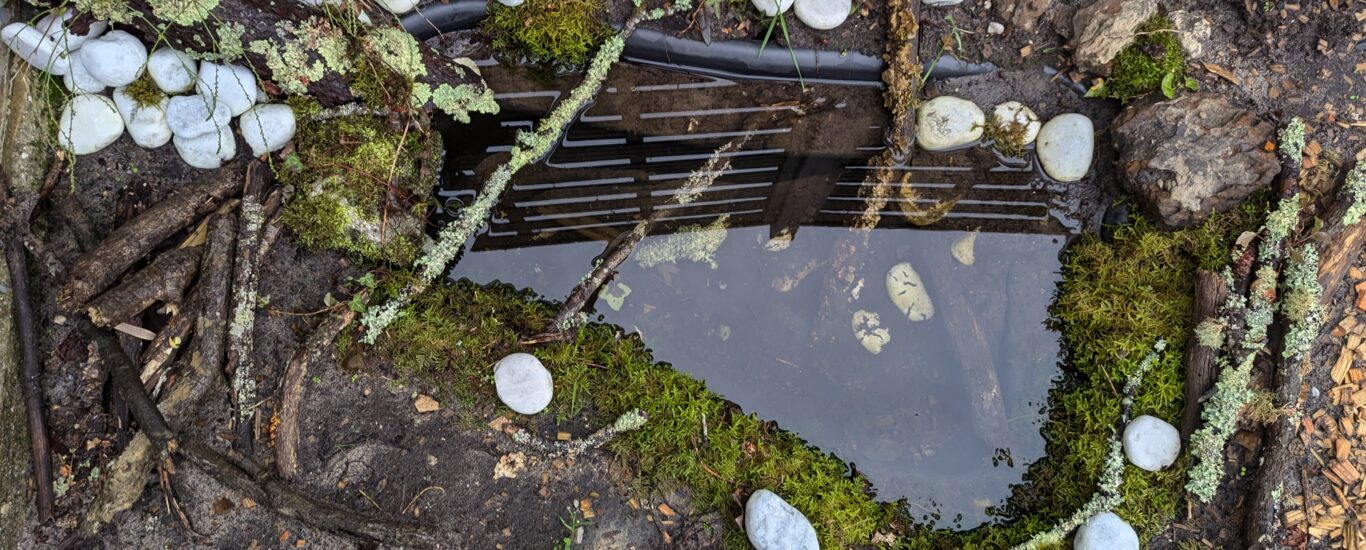
In the face of the rapid decline of aquatic habitats across Europe, gardens can play a far more significant role than is often assumed. It is within this context that the association is publishing an online mini-guide dedicated to creating a mini-pond in your garden.
Ponds are among the most biodiversity-rich habitats, yet also among the most threatened. In Europe, nearly 50% of ponds have disappeared over the past century, leading to a marked decline in many species, particularly amphibians, aquatic insects, and specialised plant species. Yet even at a very small scale, these habitats can be recreated and can play a major ecological role.
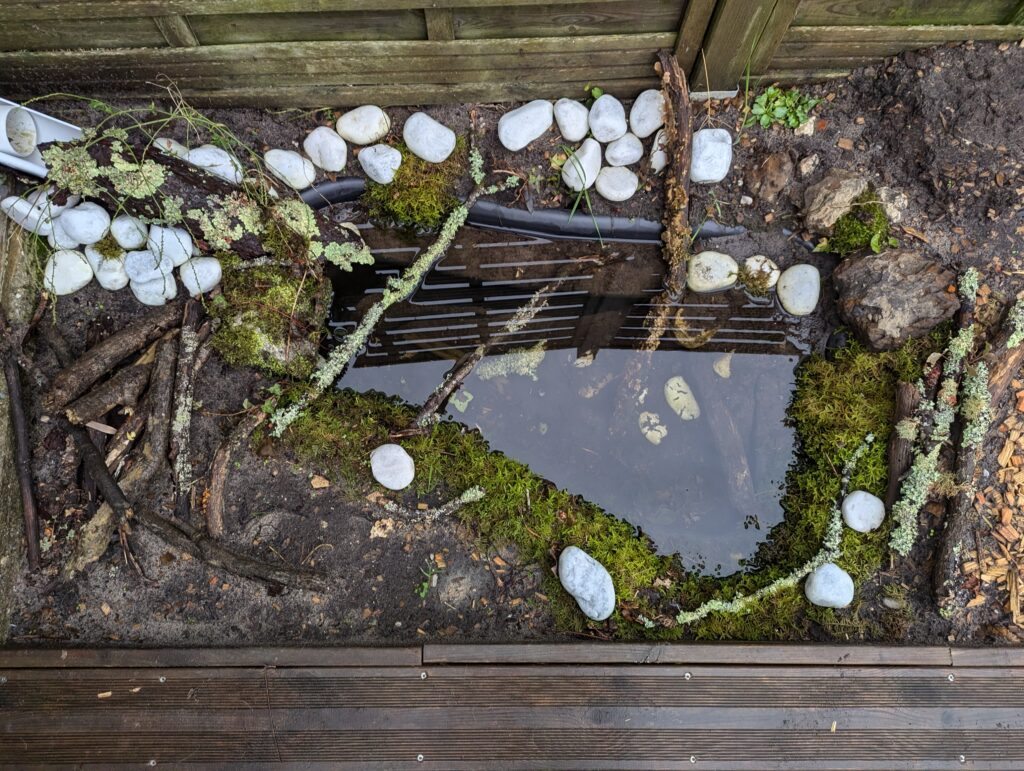
Why a Mini-Pond Makes a Difference
A mini-pond is a shallow aquatic ecosystem, generally less than two metres deep, capable of rapidly supporting a wide diversity of organisms. Amphibians, dragonflies, aquatic beetles, hydrophytic plants, and microorganisms can all find suitable conditions for their life cycles.
Beyond biodiversity, ponds also play an important functional role:
- they contribute to the regulation of the water cycle,
- temporarily store rainwater,
- reduce surface runoff and soil erosion,
- enhance the resilience of gardens to droughts and heatwaves.
Even a small pond can therefore have a real and measurable ecological impact.
A Guide Grounded in Scientific Ecology
The Guide to Creating a Mini-Pond offers a step-by-step approach to designing a functional, long-lasting pond adapted to local species.
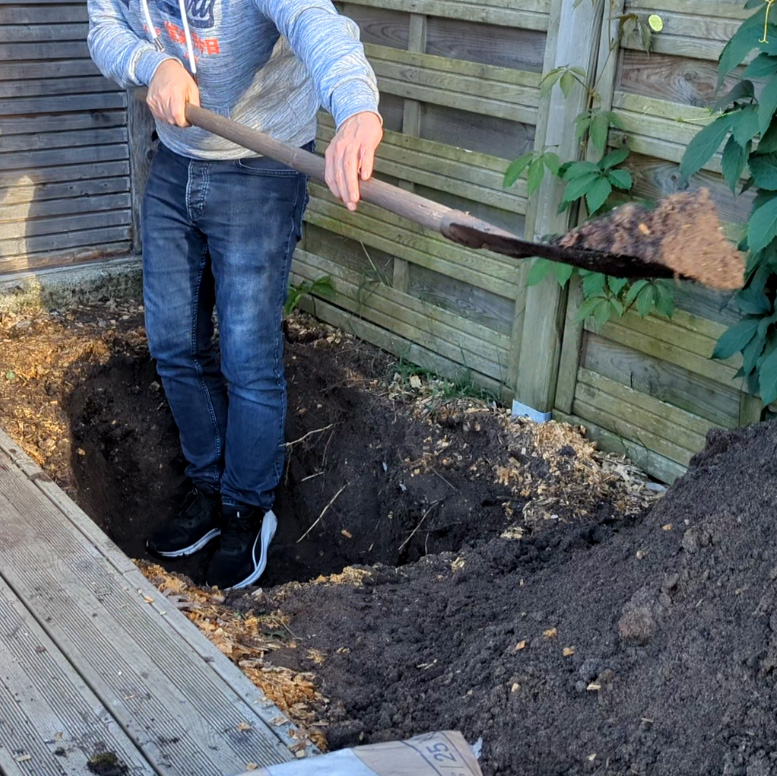
The guide addresses in particular:
- the selection of a suitable location, especially in semi-shaded conditions,
- the importance of gentle slopes and varied depths in creating diverse microhabitats,
- the key role of natural substrates in water filtration and ecosystem stability,
- the design of pond margins to provide complementary terrestrial refuges,
- the use of rainwater to maintain the chemical balance of the aquatic environment.
The aim is not to create a decorative water feature, but a true aquatic habitat, capable of evolving naturally and being progressively colonised.
Observing Life Take Hold
One of the most striking aspects of creating a pond is observing natural colonisation. Within a few weeks, aquatic insects may appear, sometimes followed by frogs, newts, or dragonflies. These species play an essential role in maintaining ecosystem balance, regulating populations, and structuring food webs.
The pond thus becomes a living, evolving space and a powerful tool for ecological awareness, particularly for children.
A Tool for Action at Your Own Scale
This mini-guide is part of a broader approach aimed at promoting simple, accessible, and scientifically grounded actions, enabling everyone to act concretely in support of living systems.
Creating a mini-pond, even a modest one, helps restore a rare habitat, strengthen local ecological networks, and reintroduce wildness into everyday spaces.